

This T format graphically depicts the debits on the left Airbnb Accounting and Bookkeeping side of the T and the credits on the right side. This system allows accountants and bookkeepers to easily track account balances and spot errors in journal entries. The top of the T is used as a heading for the name of the account to identify the account, which is the category for the transaction being recorded like supplies, rent, etc. Below the heading, the left side or debit side is used for debit entries and the right side or credit side is for credit entries. Since different accounts will have multiple journal entries and transactions, several numbers will show in the debit column and credit columns. Sometimes you will see debit and credit labeled as dr and cr respectively.
- The right side (credit side) is conversely, a decrease to the asset account.
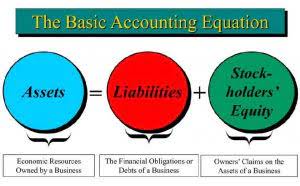
- As you may assume, the accounting equation is central to the balance sheet as it must always balance as well.
- The opposite of what increases the account balances will hold to decrease those accounts.
- They help you see how a transaction moves money between accounts.
- Instead of the normal debit balance that most assets have, the normal balance of a contra-asset account is located at the credit side of the T-account.
- In the Accounts Receivable T-Account, the $30,800 record of what is due to the company goes on the left (debit) side of the account because Accounts Receivable is increasing.
What is a Shipping Invoice? A Simple Guide
As discussed in the previous step, journal entries are used to record a business transaction and subsequently a change in the accounting equation. A double entry system is considered complex and is employed by accountants or CPAs (Certified Public Accountants). The information they enter needs to be recorded in an easy to understand way. This is why a T account structure is used, to clearly mark the separation between “debits” and “credits”. A T-account is a simple ledger format that separates debits (left side) and credits (right side) to record financial transactions. If t accounts you want a career in accounting, T Accounts may be your new best friend.
Working Out An Example of T Accounts
At the end of the accounting period, the balance of the accounts can either result to a debit balance or a credit balance. T-accounts track the balances and transactions of individual accounts, while a trial balance summary verifies the overall accuracy of a company’s financial records. A trial balance report summarizes all account balances from the general ledger, listing both debit and credit amounts.
Contra-revenue accounts
If the labor costs are still debited and credited fully, then this type of mistake can also be difficult to catch. However, it will most likely be caught if there’s an audit. A double entry system is a detailed bookkeeping process where every entry has an additional corresponding entry to a different account. Consider the word “double” in “double entry” standing for “debit” and “credit”. The two totals for each must balance, otherwise there is an error in the recording.

When you pay the bill within 60 days, you’d record a $50,000 debit to accounts payable and a $50,000 credit to cash. Mastering this simple visual tool can strengthen accuracy, prevent missed payments, and improve financial health. Since services are sold on credit, the accounts receivable account increases and gets debited for $600. Revenue also increases, so the Repair Service Revenue account gets credited for $600. A T account (or general ledger account) is a graphical representation of a general ledger account.
How AI Optimizes Accounting
- Two entries (hence, double entry), one on the left and one on the right, so everything is good.
- In the previous example, we can say that the Sales account was credited by $1,000 for the sale of merchandise.
- Let’s assume, as a second example, that your business maintains a checking account with a bank that is used for depositing sales and issuing checks for payments.
- T-accounts help you visualize how money moves through your books.
- Total debits amount to $320,000 while total credits amount to $230,000.
The use of contra accounts allows the reporting of the original amount as well as the net amount or carrying value separately. It is more informative to present the accounts this way rather than presenting only their net amounts. For example, currencies, coins, checks, and bank drafts can be grouped and recorded in the Cash or Cash on Hand account. Customer invoices are grouped in the Accounts Receivable account.
T-Account Examples
- It summarizes all the transactions from every account that were posted throughout the year.
- The funds become a business asset recorded in the company’s books under an account called “Cash”.
- Debits and Credits are simply accounting terminologies that can be traced back hundreds of years, which are still used in today’s double-entry accounting system.
- T-accounts are a fundamental accounting tool used to visualize and manage financial transactions within a ledger.
- In the Salaries Expense T-Account, the $7,300 deposit goes on the left (debit) side of the account because the expense is increasing.
- T accounts—simple, two-sided tools—make this task manageable by showing you exactly how each transaction affects your individual accounts.
- This dual-entry structure keeps your accounting equation balanced.
That is why each account has its own individual ledger account. For example, the fixed assets account would have its own ledger account with only transaction involving fixed assets. Some businesses adopt advanced software solutions that automate and streamline accounting processes. In such cases, traditional T accounts may feel redundant or cumbersome. Additionally, companies using accrual accounting often find that T accounts don’t capture the full scope of their financial activities as accurately as they require. If you set up the t-accounts for the journal entries, start by posting the original balances.

T-accounts help keep the books balanced by showing all payables and payments clearly. Since so many transactions are posted at accounting once, it can be difficult post them all. In order to keep track of transactions, I like to number each journal entry as its debit and credit is added to the T-accounts.